Door Entry Systems in Derby
A better welcome. A controlled front door.
Speak to visitors before opening the door. We plan audio and video door entry systems for Derby offices, schools, commercial landlords and managed premises, connecting visitor calls with a practical, controlled release arrangement.
Discuss Your Project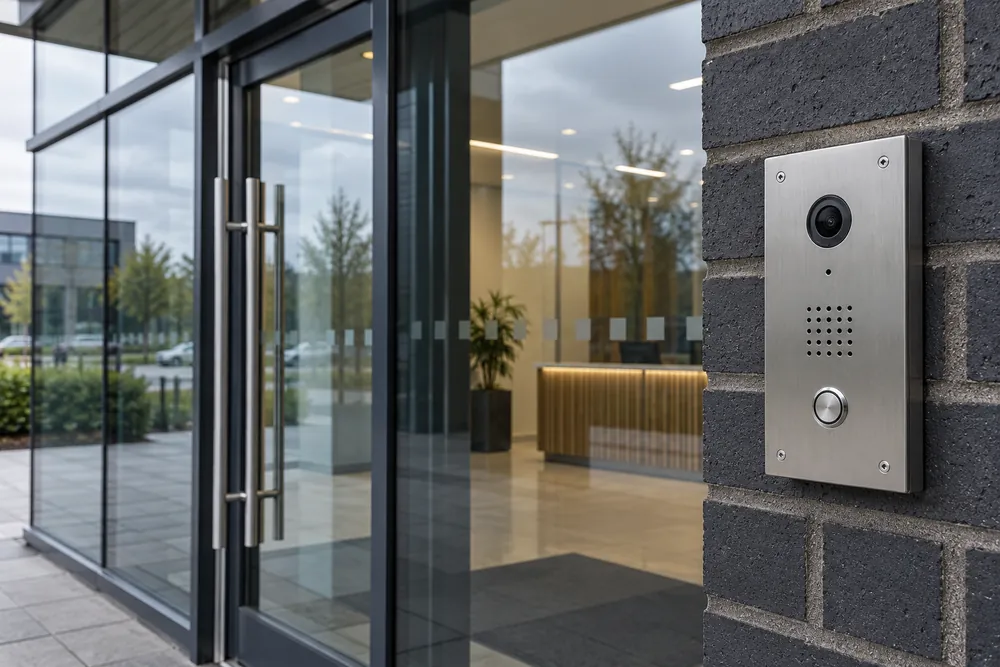
Know Who Is at the Entrance
A door entry system links a visitor call point with the person deciding whether to admit them. It can be a simple audio intercom at a staff entrance or a video system serving several tenants. The right design starts with who answers, how they identify the visitor and which door they can release.
Reception coverage often changes through the day. Consider what happens during lunch breaks, meetings and evening cleaning rather than planning only for a staffed desk. A missed call needs a clear outcome, and the system should not encourage visitors to wait in an unsafe loading or vehicle area.
For schools and controlled workplaces, talk through visitor safeguarding procedures and reception sightlines. An intercom supports the procedure rather than replacing it. The person answering still needs a reliable way to verify the reason for the visit and decide whether access is appropriate.
Audio, Video and IP Options
Audio entry may be enough where staff have a direct view of the entrance. Video entry can help where that view is missing, but the camera position and lighting must give a useful image. Backlighting, rain exposure, mounting height and traffic noise should be checked during the survey.
An IP intercom may connect to a supported handset, reception screen or application. Check the existing network, power provision, licensing and the effect of an internet outage. An application notification is useful only if someone is responsible for answering it and the required devices are supported.
A multi-tenant call panel needs a manageable way to update destinations when occupancy changes. Agree whether names are displayed and what information is necessary. Keep unused call destinations and old accounts under review, with a named person responsible for changes.
Door Hardware, Escape and Accessibility
The release signal is only one part of the doorway. The lock, closer and frame must support reliable closing, controlled entry and the required means of escape. A door that remains on the latch after a delivery can undermine the intended security even when the intercom works correctly.
Commercial emergency escape arrangements sit within the Regulatory Reform (Fire Safety) Order 2005. The government workplace evacuation guidance includes emergency doors that open easily. Check release arrangements against the fire risk assessment and test any specified interfaces under controlled conditions.
Accessibility should be considered when selecting the call point and answering equipment. The BSIA specifier guide discusses access design and the Equality Act. Review reach, clear approach space, visual or audible feedback and how a visitor with communication needs will get assistance.
Installation Without Guesswork
The first step is to map the call journey. Identify each entrance, call destination and release permission, then agree the expected behaviour when a call is unanswered. Include reception, facilities and IT contacts where their systems or working practices will be affected.
The survey checks cable routes, existing wiring, network capacity, weather exposure and the condition of the door hardware. Reusing cabling may be possible, but it needs testing for the proposed equipment. Confirm any making-good work and working-hour restrictions before the quotation is accepted.
Commissioning should test conversation quality, camera view, call routing, door release and automatic closing. Check the agreed outage behaviour and show staff how to handle a visitor safely. Handover should identify equipment, administrator access, operating instructions and the route for future changes.
Privacy and Recording Choices
A live video intercom and a system that records visitor footage have different practical implications. Decide whether recording is necessary before enabling it. Where identifiable people are recorded, the business needs an appropriate purpose, transparency, access restrictions and a suitable retention decision.
Visitor images and call logs should not become a general staff surveillance tool by accident. Limit permissions and explain any recording to the people affected. For CCTV-related questions, the ICO guidance is a useful starting point.
What Affects the Quotation
The number of entrances and answering points, cable condition, networking, lock work and tenant call routing all affect cost. Outdoor panels may need a different mounting arrangement from an internal lobby. Software subscriptions, application licences and future directory changes should be explained before you choose.
Send the property postcode, number of doors and intended call destinations with your enquiry. Mention any existing entry equipment and whether the door is part of an escape route. That information makes the survey discussion more useful and helps identify related access control work.
Your Door Entry Questions
Can Door Entry Calls Go to a Mobile?
Door entry calls can reach a mobile on systems that support the relevant application or call service. Check device support, network availability, subscription charges and who answers when the main contact is unavailable. The design should also define what happens during an internet outage and keep door release permissions limited to authorised users.
Can You Replace an Old Intercom?
An old intercom can often be replaced, but the existing wiring and door release hardware need checking first. A new video or IP system may need different cabling, power or network equipment. Share the current panel details and the number of answering points so the survey can assess reuse without assuming compatibility.
Make Your Next Security
Decision a Clear One.
Tell us what needs protecting, where you are and what is already in place.
Discuss Your Project